NEW PILOT RESOURCES
Learn your aircraft. Build your skills.
Practical education for pilots who want to understand more than the controls.
A drone combines an aircraft, a camera, and a collection of systems that deserve your attention. Learning how those pieces work together helps you prepare more thoughtfully and get more from every flight.
Scott Hertzog brings his photography background and experience as an FAA Part 107 certificated commercial drone pilot to conversations with new pilots. Whether you want to understand your first aircraft or improve your aerial images, start with your goals.
Start with the fundamentals
1. Know your aircraft
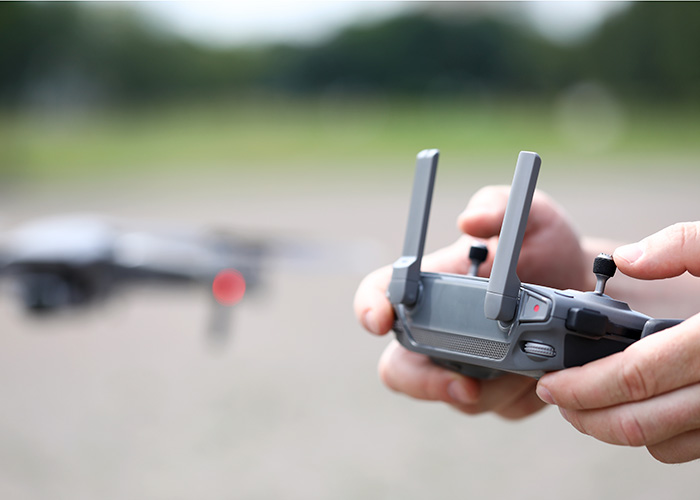
Read the manufacturer’s manual for your specific aircraft and controller. Get familiar with the controls, battery information, warnings, flight modes, and return-to-home behavior before relying on them in the air. Features and settings differ between aircraft.
2. Build a preparation routine
Give yourself time to inspect the aircraft, propellers, batteries, and controller. Review the location, conditions, surrounding obstacles, and a suitable takeoff and landing area. A repeatable routine helps you notice what has changed from one flight to the next.
3. Practice deliberately
Choose one skill to work on at a time. Smooth control inputs, steady hovering, controlled turns, and a planned landing are useful foundations. Leave room to learn and avoid letting the shot become more important than managing the flight.
4. Think like a photographer
Before launching, decide what your image should communicate. Look for useful light, a clear subject, and a composition that makes the aerial viewpoint worthwhile. A higher altitude is not automatically a better photograph.
5. Review and improve
After a flight, look at your images and consider what worked. Were the framing and camera settings appropriate? What would you prepare or practice differently next time? Keep notes so the next flight builds on the last.
Learn with Scott
Get in touch to discuss aircraft familiarization, preparation, camera controls, composition, and your next learning goals. Share your drone model, experience level, and the areas where you want guidance.
See Scott’s drone learning information
These introductory resources complement your aircraft manual and current official aviation guidance. They do not replace flight training or establish permission to fly at a particular location.
DRONE C.A.T.S.
Let’s talk about your project.
Contact Scott · 484-525-0152
Sinking Spring, Pennsylvania